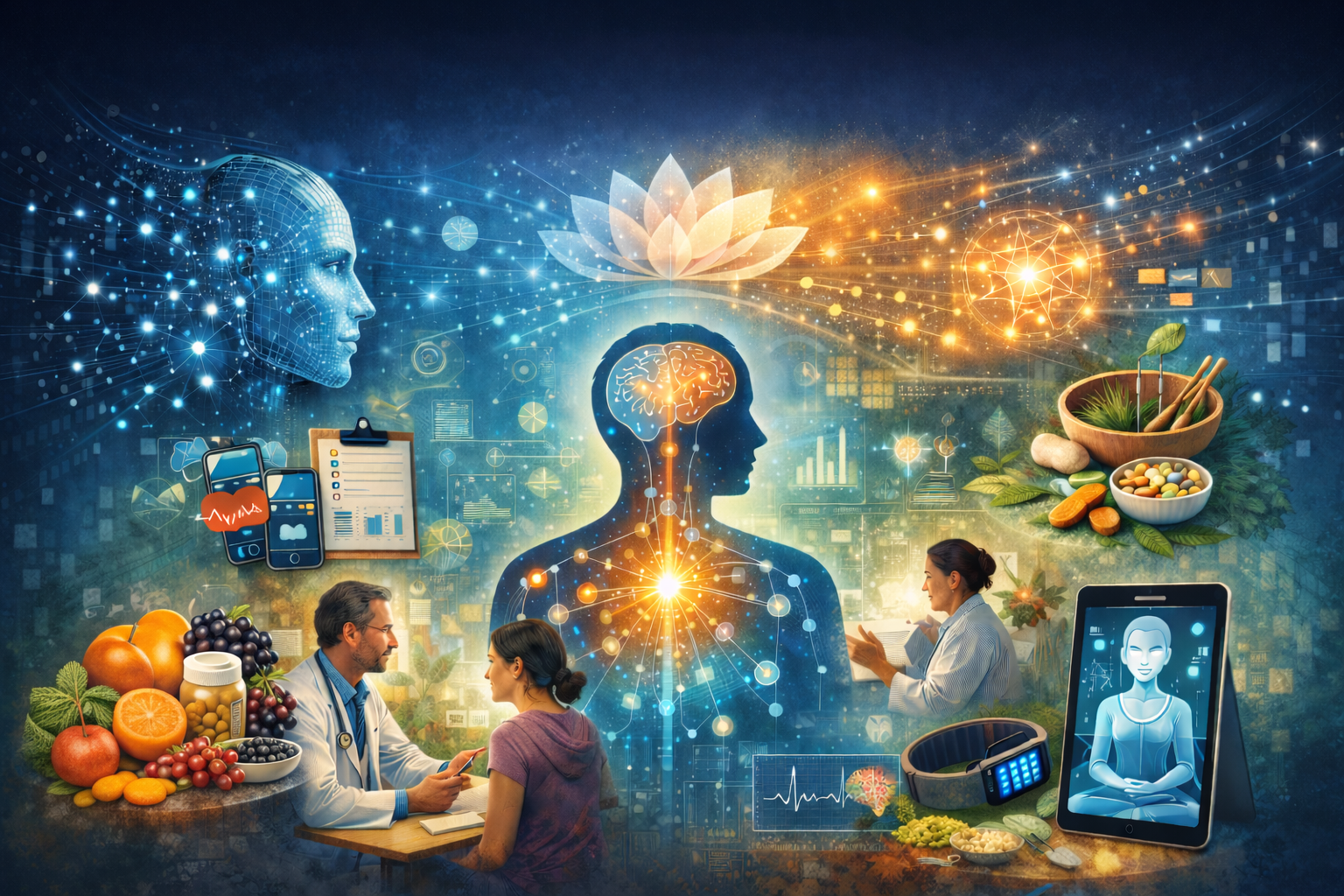
AI will also enhance preventive care, a core principle of integrative medicine. Wearable devices and health apps already track metrics like heart rate variability, sleep quality, physical activity, and glucose levels. In the coming years, AI will increasingly interpret these data in real time, flagging early signs of imbalance or disease risk. This will allow clinicians and patients to intervene earlier with lifestyle or behavioral changes, potentially reducing reliance on more aggressive treatments later on.
Another important shift will occur in patient engagement and education. AI-powered virtual health assistants can support patients between visits by answering questions, offering reminders for supplements or exercises, guiding meditation or breathwork practices, and reinforcing behavior change. This continuous support aligns well with integrative medicine’s emphasis on self-care and patient empowerment, while also helping clinicians extend their reach without increasing burnout.
Research and evidence-building in integrative medicine may also accelerate. AI can analyze large datasets from clinical studies, electronic health records, and patient-reported outcomes to better evaluate the effectiveness of integrative therapies. This could strengthen the scientific foundation of the field, helping distinguish which approaches work best for specific populations and conditions.
Despite these advances, human judgment and the therapeutic relationship will remain central. Integrative medicine is rooted in empathy, listening, and understanding the whole person—qualities
AI cannot replicate. Instead, AI will function as an intelligent assistant, freeing practitioners from administrative tasks and data overload so they can focus more fully on healing relationships.
In the next few years, AI will not replace integrative medicine; it will amplify it—making care more personalized, proactive, and accessible than ever before.